
Mudskipper Fund

Financing climate-smart shrimp aquaculture and mangrove restoration

Mudskipper Fund links long-term credit for shrimp producers with mangrove restoration and conservation commitments. The fund’s initial focus is Indonesia, to reverse the significant mangrove deforestation caused by expansion of the shrimp aquaculture industry.

Mudskipper finances improvements in farm productivity and operations. Each financing agreement requires the borrower to support mangrove restoration and protect existing mangroves.

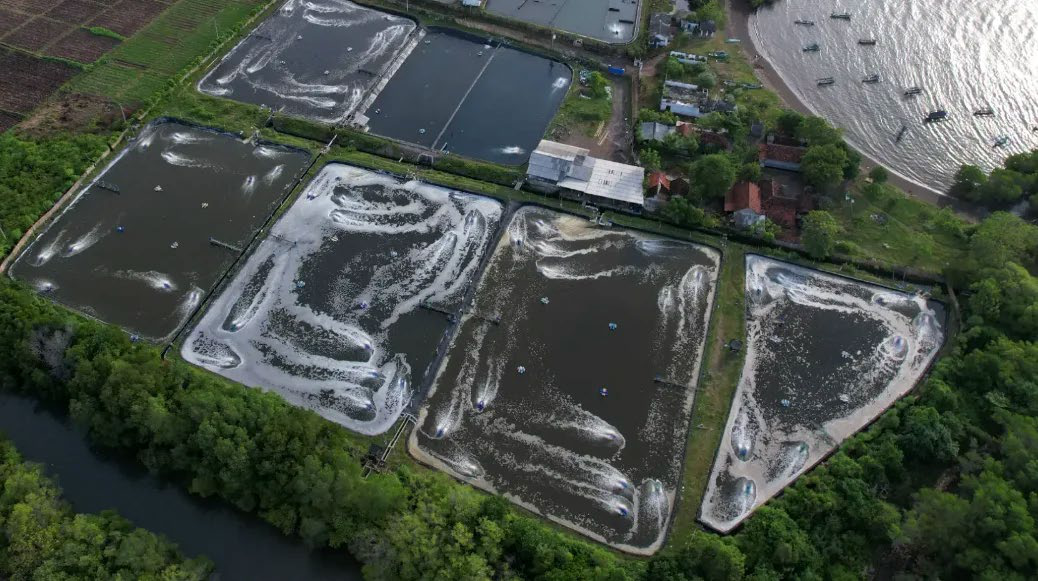
Aerial view of shrimp ponds surrounded by green coastal vegetation.
Financing for improvements to existing shrimp farms.

The shrimp market and its coastal footprint

US$79.2bn

Estimated global shrimp market revenue in 2025.1

60.1%

Share of global shrimp market revenue from aquaculture in 2025.2

Nearly 250,000 ha

Mangrove forest lost to shrimp-farm expansion over a two-decade period.3

1, 2 Grand View Research, Shrimp Market Report (2025 estimates). 3 Climate Finance Lab, Climate-Smart Shrimp Fund overview (historical two-decade estimate).

Addressing a significant financing gap in the sector

Bank lending in the sector is limited and, where it exists, is predominantly short-term. Pond rehabilitation, water treatment and other infrastructure require financing that extends across several production cycles.

Underinvestment leaves farms exposed to low yields and recurring losses from disease and increased mortality. Expansion into new pond areas has contributed to mangrove loss, while producers lack financing for the restoration that improves farm productivity and climate resilience.

Mudskipper finances improvements on existing farms and makes restoration a condition of the loan. This provides blue carbon mitigation and other climate-resilient benefits while reducing environmental, social and governance risks.

Investment
approach

The portfolio includes established shrimp producers, processors and integrated supply chain businesses, with an allocation to cohorts and cooperatives of smallholder farms.

Corporate lending

Financing is structured around the borrower’s operations and cash flow. Instruments include secured term loans, revolving working capital and supply chain facilities, acquisition financing and subordinated debt.

Loan proceeds finance pond infrastructure, water management, biosecurity, certification and business expansion. Credit assessment examines financial strength, operating history, control over the financed farms and the borrower’s capacity to meet environmental obligations.

Smallholder lending

The fund lends to dedicated vehicles that finance groups of smallholder farms. An operating partner selects and supervises the farms, manages rehabilitation and aggregates harvests. Profit-participating loans are Sharia-compliant and fund infrastructure, seed, feed and other production costs.

Harvest proceeds pass through controlled accounts to support repayment. Farm-level operating data and traceability inform underwriting and ongoing monitoring.

Mangrove restoration
and conservation

Every financing agreement requires the borrower to finance or host mangrove restoration and/or conservation, and prohibits further mangrove conversion on land it controls. Restoration takes place within a farm, on adjacent land or as part of large-scale sub-national efforts.

Site selection reflects ecological conditions and the opportunity to optimize impact and investment returns. Projects follow the Global Mangrove Alliance’s best-practice guidance.

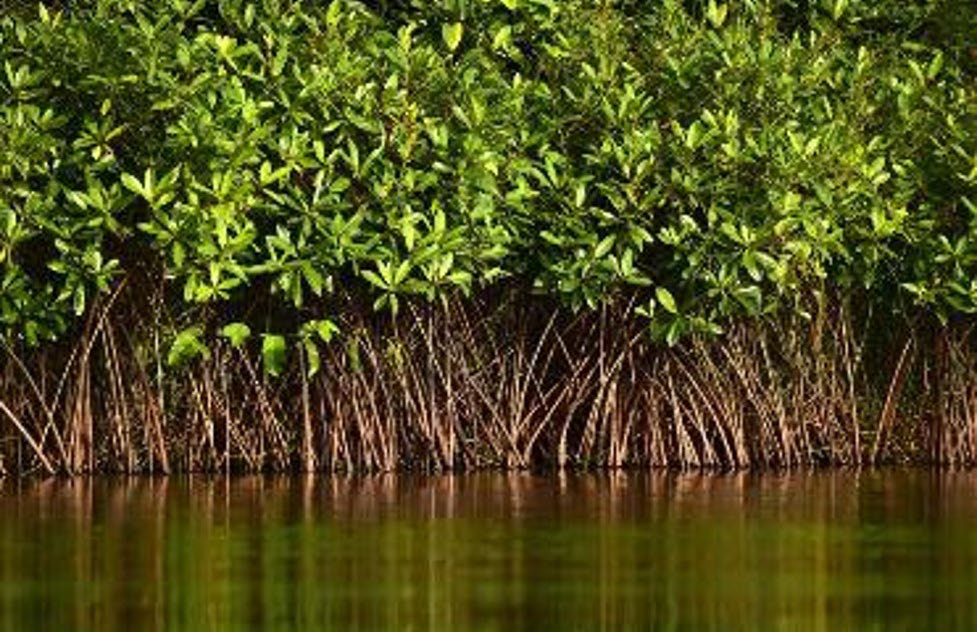
Mangrove trees and exposed roots along a coastal waterway.
Restoration forms part of the financing agreement.

Monitoring and technical assistance

Monitoring combines mapped farm boundaries, satellite imagery, quarterly reporting and independent annual verification. Hectares restored or under restoration agreement are the primary measure, alongside responsible production, livelihoods, climate outcomes and biodiversity.

A separate technical assistance facility supports environmental due diligence, ESG corrective actions, and impact monitoring and evaluation. Restoration obligations are monitored alongside financial performance.

Fund partners

Fund manager and GP sponsor

Deliberate Capital manages the Meloy Fund, launched in 2017 to invest in coastal fisheries and aquaculture in Indonesia and the Philippines, and was formerly the sub-advisor to the Global Fund for Coral Reefs. Its experience includes debt and equity investments in Indonesian shrimp businesses and financing models for smallholder farms.

Deliberate Capital leads Mudskipper’s origination, credit assessment, portfolio construction and management.

Impact adviser and technical assistance sponsor

Conservation International developed the Climate-Smart Shrimp model and directs pilots with Indonesian NGOs and companies. The fund concept received endorsement from the Global Innovation Lab for Climate Finance and a Convergence design grant.

Conservation International provides expertise in mangrove restoration, environmental safeguards and impact measurement, supported by longstanding partnerships in Indonesia.

Contact

For information about investment,
financing or partnerships.

Dale Galvin

Chief Executive Officer
Deliberate Capital

dgalvin@deliberatecapital.com

Dane Klinger

Senior Director, Blue Foods
Conservation International

dklinger@conservation.org